Comet Features Compared with Experiment Results
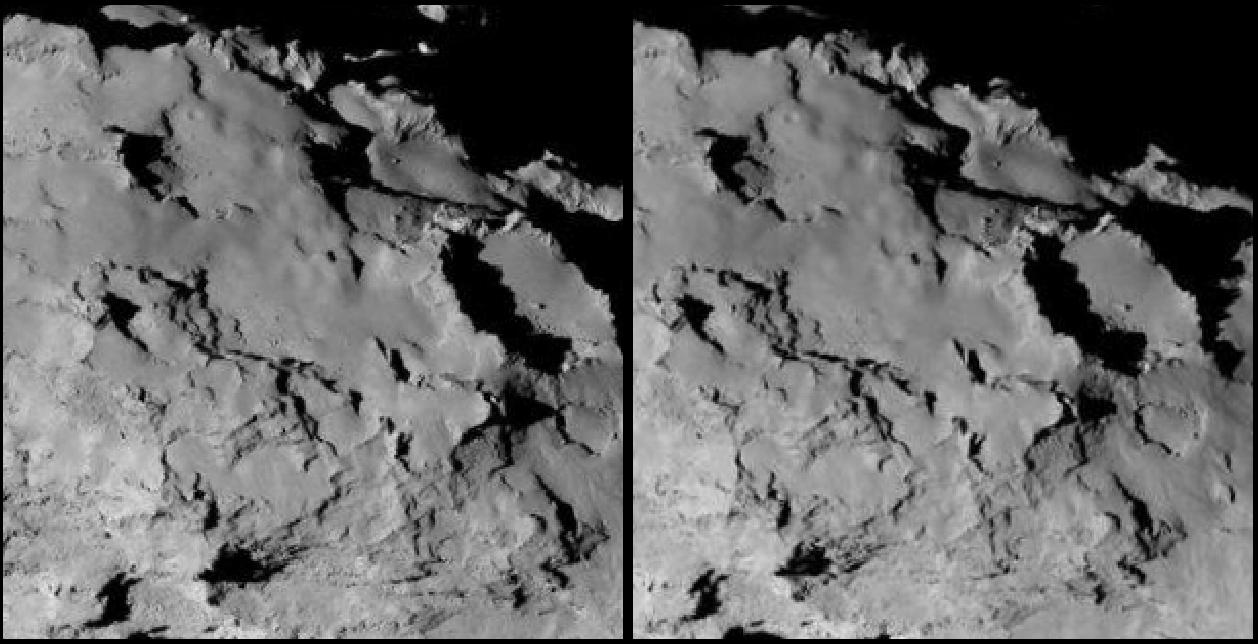
The image below(rt) has two features which don't appear to fit into
the same list of processes for formation.
The peak on the left has four sides which are very steep with almost
symetrical sides and angles.. I've seen this symetry from experiments
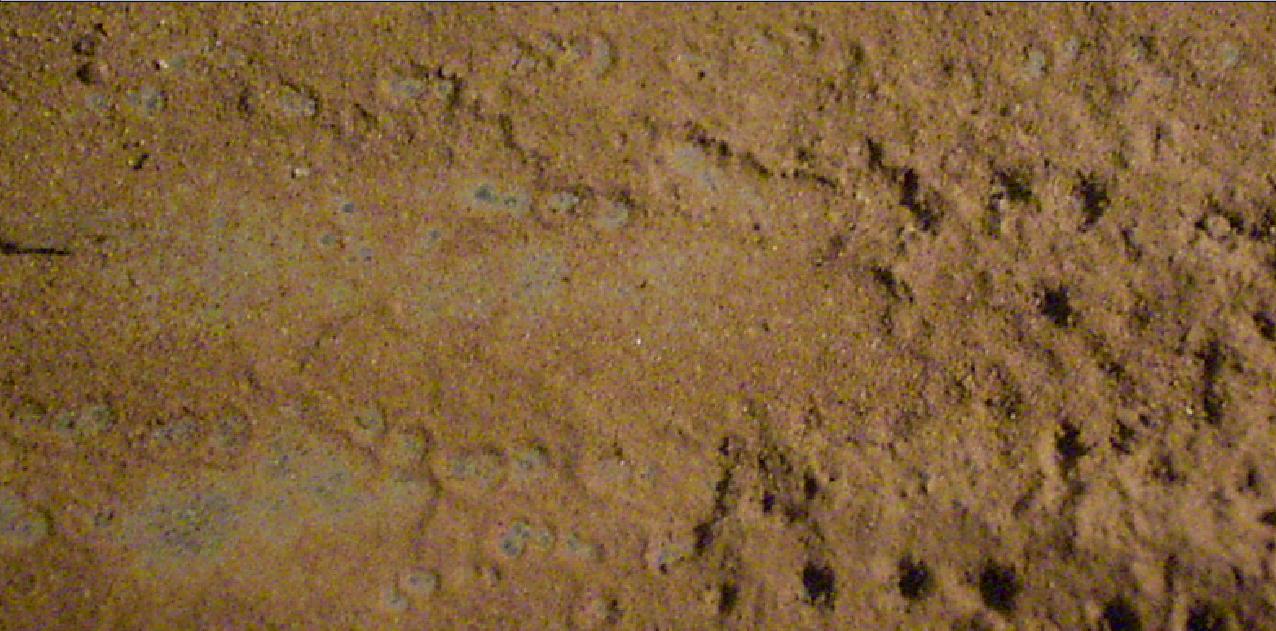
with electric forces. The image on the left is from an experiment to make
crater chains with electric forces, both electric wind and arcs, which produced sharp-edged features, some showing what can happen when material is eroded from all around a central point.. If three craters are in contact the remaining material between them is a peak with three sides. A similar result can be expected if material removal is more linear and intersecting.
The crater at the right of the right image has steep sharp exterior walls
which are very irregular in height and characteristics.
Compare the second image from splash experiments.
 _ _
_ _
An important detail about the impactor which made the craters below
is they were drops of water striking a semi-liquified material.
This was an effort to reduce gravitational influences and
magnify the force of the water dropplet..
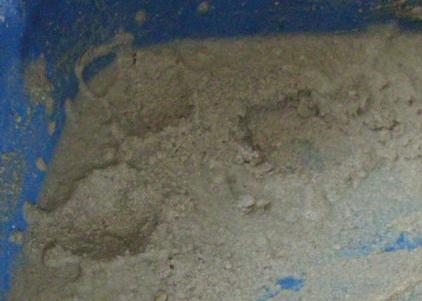
Its hydraulic condition results in
symetrical displacement of material..
This might be comparable to a semi-solid body that has passed through an atmosphere such as earths,,
or possibly one that
is a conglomerate held together with a maleable material.
The following images are from electric discharge experiments.

I've done many experiment with electric discharge and the lack of even distribution of rim material in the Rosetta image above might disqualify that process from formation of that feature. However, the four-sided peak to its left and some other adjacent features might have been electrically influenced or even machined.
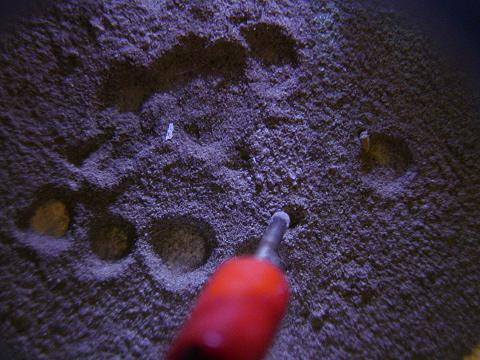
The pointed parts of the peaks in the image below were electrically formed, uplifted by a passing electric field and possibly discharges. There are other experiments to speak of once i gather all the details.

Electric-spark-scars.com