The presence of surface water alters the force-dynamics that formed Meteor Crater
|
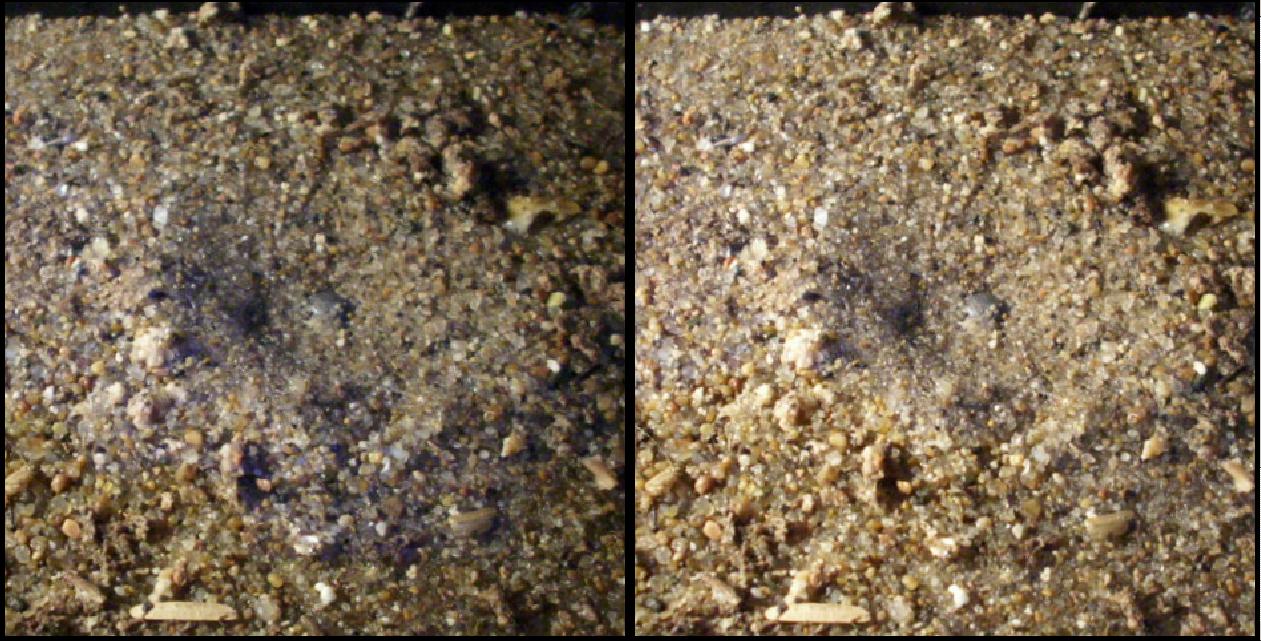
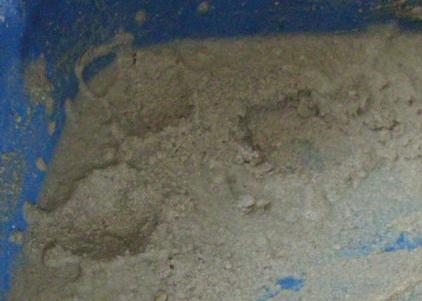
See images in this directory for a visual comparison of the appearance of experimental features made in saturated material to demonstrate how the presence of an inland body of water called Hopi Lake (also Bidahochi lake) could have aided in the formation of meteor crater...For the moment we will work off the premiss that the object struck the ground, thus becoming a meteorite. I don't know if it would loose that designation if it exploded close overhead,, but for the sake of clarity -"meteorite" will be used for the remainder of this page. Notice -in the image below- that two of the craters have squared off sides, which is also seen in the adjacent image of meteorite crater. From my experiments with electrical discharge for the formation of crater features i was not convinced that an EDM mechanism could be applied to meteorite crater in northern arizona. Dr. Walter brown's hydroplate theory revealed that a large inland body of water was present in northern arizona and this got me to thinking about alternative mechanisms for the formation of this bowl-shaped feature having obvious symmetry. Solid object impacts to solid ground are less precise,, as can be seen at a Nicuragua crater and another recent one in central america,, both were witnessed and exmained shortly after occurrance. This calls for an alternative explanation for Barringer crater, pictured above. The images below show two different soil conditions and the results of a balistic impact by the same type of hard metal ball, seen still in place in the right image.. I didn't have the exact same powder-charge behind the ball -the right one being considerably weaker- so this is just a temporary stand-in picture which shows the chaos of one condition and the uniformity of a saturated material sample. Hydraulic forces magnify the forces of an impacting body and distribute them somewhat evenly, but we must also consider additionally that the body was not in a solid state.. It was very likely a partially plasticized body by the time of near contact, converted into a plasma-like state during its passage through earth's atmosphere. The requirement of body behavior and soil condition can be seen in the images above, one detail standing out is vertical penetration and the absence of concaved curvature along radial paths from the base of penetration. Notice in the right image that fluid saturation equalized the forces but did not produce concaved walls. Concaved walls to form a bowl-shaped crater has occured as seen in the top left image of three splash-craters.. This same result is anticipated with a paint-ball like projectile... Once i have one of those i will do various experiments with surface conditions to see what results and how they compare to solid objects. There are additional considerations to factor in here beyond this semi-solid condition, they are: an explosive release of force from above and upon the body of water; and the possibility of electrical discharge to the surface.. These will require additional investigation, experimentation and modeling,, but we can be sure of one thing,, whatever evidence remains in the area it will have unmistakable characteristics which should reveal further clues into this mystery. A search on the web of explosion-craters will offer some perspective on the varios types of craters and the circumstances surrounding their formation. One that caught my attention due to its location and appearance is a 30x80 ft crater made by high-explosives detonated by the fuel tank fire of an overturned transport truck.. This may have been a focused explosion or shapped charge since the explosives were housed in trnasport casings.. We can reasonably tie in numerous regional geologic features into this event, some were immediate, while others were delayed effects.. partial displacement of the lake was an immediate effect, along with much lateral damage from the blast, especially if it occured as a bolide-type event. But for the moment we are following the meteorite scenario upon a shallow lakeside location.. Volcanic activity near Flagstaff and crustal fracturing and shifting can also be expected by the various consequential effects as well as the initial meteoric event.
Lateral displacement of ejecta is being observed to estimate the placement of nodules of superheated haterial into adjacent sediments prior to lowering of Hopi Lake's level through drainage. One suspected nodule grouping is found at quite a distance from the crater where the western edge of the lake is proposed to have covered.. There may have been two stages for the emptying of Hopi Lake since no legend of a meteoric event has yet been found in local native accounts. A wikipedia claim that meteor crater was formed around 49,000 yag prior to the presence of human witnesses is speculation that my not stand the test of time and further investigation from a non-gradualist perspective. A more recent date is estimatee at 22,000yag, offered in Roadside geology of Az.There may not have been many local survivors but i cannot rule out entirely some distant or displaced witnesses placing some record of such an event into rock art or legend. And there is a storng probability that it was the result of a more recent event in early historical times according to a catastropist perspective.
|
 __
__